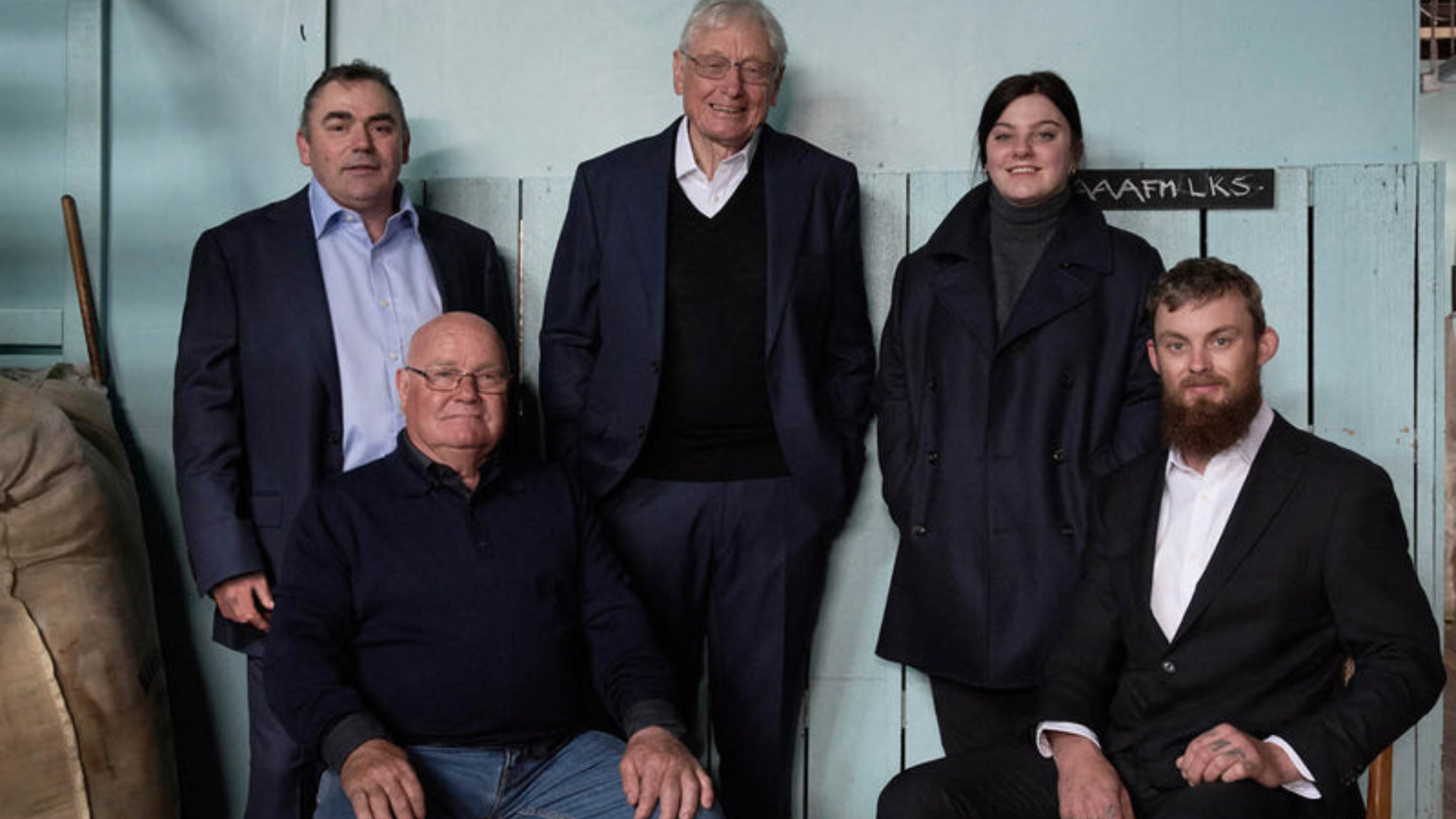
MJ Bale - The Makers: Kingston Portraits The Shearers.
Nestled in a rugged, windswept valley at the foot of northern Tasmania's Ben Lomond Mountain, Kingston might be one of Australia's most isolated farms. But at this conservationist enterprise – home some of the nation's finest superfine Merino wool – nothing acts in isolation.
When Kingston custodian Simon Cameron speaks about his farm, he uses the word "interdependency." It's a holistic philosophy where everything connects and strengthens everything else. Thenomadic sheep depend on Kingston's vast indigenous grasslands – what Simon calls the "rough country" – for nutrition and shelter; the grasslands depend on the sheep for regenerative management. Conservation efforts depend on sustainable farming; the farm's long-term viability depends on healthy ecosystems.
This interdependency extends to people. Simon depends on his assistants, workers, and shearers for their expertise and care. They depend on him for leadership and stewardship. Success requires collaboration, not hierarchy – a recognition that long-term prosperity comes from nurturing relationships across land, animals, and people.
Of Kingston’s people, the shearers represent an untold link in the wool’s chain of custody. To capture their faces, character, and craft, we commissioned Hugh Stewart, one of Australia’s most accomplished portrait photographers, to tell their story.
The shearers include Greg “Fruity” Laycock, who has worked with the Cameron family for over 40 years, alongside Simon’s grandfather, “the Colonel” Donald Cameron, and father, “the Major” Ralph Cameron. Fruity’s nickname is an abbreviation of “fruit bat” – given to him because he would hang from the rafters by his ankles after a long day’s shearing to stretch out his sore back
Also featured in the Kingston portraits is Ricky, a third-generation shearer who has been working with Simon for 15 years. Ricky is described as the “quiet boss,” the guy who officially runs the shed. He sees his role during shearing as that of quality control. “With fine wool like Kingston’s, because you have such a high-quality product, the more you can get that fibre off in one piece, it’s paramount to maintaining that quality.” (And for any M.J. Bale customers who might find themselves playing eight-ball around Ricky’s hometown of Cressy, Tasmania: the man has a reputation as a gun player.)
There’s Jake, who Kingston assistant manager Brodie Parker calls a “good guy to have in the shed” because he cracks jokes, works hard, and “just gets on with it.” “I feel very flash, very neat and very tidy, but a little bit overdressed,” Jake said during Hugh’s shoot, as he modelled the Kingston Black Wattle suit.
And there’s Hayley from Campania, a town in Tasmania’s Coal River Valley. When Hayley first started shearing, there weren’t many women in the profession, but now “it’s so good to see there’s probably half and half – male and female shearers.”
“My favourite thing is photographing people,” says Hugh Stewart, who, with his rural New Zealand roots, is no stranger to shearing sheds. “The opportunity to travel to Kingston and photograph the shearing gang for M.J. Bale was genuinely exciting, and something I really appreciated"
“The challenge was dressing them in suits while retaining their individuality and character. This wasn’t difficult, because they embraced the entire process and, like all portraits I’m proud of, the images seemed to make themselves.”
Not in the shoot, but critical to operations and maintaining Kingston's high standards, are sheep classer Brett Cox and wool classer Evelyn Archer. For decades, Brett, who works for the Australian Wool Network, has been doing the Merino version of representative sports selection: talent-spotting the right genetic mix to keep producing the wool preferred by Kingston customers.
Evelyn, as wool classer, is akin to Penfolds Grange shiraz grape selectors: she identifies the best Kingston fleeces during shearing, putting them aside for the very top bales, and acts as consigliere to Simon. She checks every fleece and allocates it to meet the wool processor’s specification.
“Everybody, whether it’s the shearers, or Brodie, or Evelyn, contributes to get the end result,” reflects Simon. “Everybody contributes with their own unique skills to give us the result we need, which is wool that M.J. Bale and the Italian fabric mills can work with, and wool that your customers want to wear.”
Of Kingston's interdependency, Simon has one more factor to add: the partnership between M.J. Bale and Kingston. “For M.J. Bale to have a product we have to do our bit, but because you’ve created, and continue to create, the opportunity for Kingston wool to have a home in a garment, we really help each other. And that’s really important for the farm, because it gives us a goal. For most wool growers, once it leaves the farm that’s the end of it. For us, because of the valued relationship, we know the high standard that is required and continuing to meet it is our goal with every wool clip we produce.”
Brodie, Kingston assistant farm manager, adds: “This collaboration with M.J. Bale gives Kingston a face and something tangible that shows the world who we are… something we can be proud of. We’re not just a farm stamp on a bale of wool. We are Kingston Farm from the northern Midlands of Tasmania.”
MJ Bale is now open, on Ground Floor of Collins Arcade.

Follow Us
Keep your finger on the pulse with all things Collins Arcade